
The Perseids Over Malta: How to Catch 2026's Best Meteor Shower, on Land or at Sea
Updated: Aug 1
Every August, the sky over the Mediterranean runs its own headline act: the Perseid meteor shower, no tickets required and doors open after midnight. This year is the one to plan around. The 2026 peak falls on the night of Wednesday 12 August into the small hours of Thursday 13 August, and it coincides almost exactly with a new moon, which means properly dark skies and the best viewing conditions since 2018. Under a dark Maltese sky, patient watchers can catch dozens of meteors an hour, and the next alignment this good is not due until 2029. If you are in Malta this August, solo or as a couple, here is how to make a night of it.
In short: the Perseids peak over Malta on the night of 12 to 13 August 2026, with the best rates after midnight. A new moon makes it the darkest peak since 2018. Head for Dingli Cliffs, Ras ir-Raheb or Gozo, or watch from a boat at anchor, and you need nothing but your eyes.
When and how to watch
The Perseids are active from mid-July to late August, but circle the peak: 12 to 13 August. The show improves as the night deepens, with the best rates in the hours after midnight through to pre-dawn. You need no telescope and no binoculars, just dark skies, somewhere comfortable to lie back, and patience. Give your eyes twenty to thirty minutes to adapt to the dark, and keep your phone in your pocket; one glance at a bright screen resets your night vision. Face roughly north-east, get the widest slice of sky you can, and let the meteors come to you.
Where to watch on land
The trick in Malta is escaping the harbour glow. From Gzira, that means heading west, south-west or north to the island's darker edges, or crossing to Gozo, where the skies are darker still.
Dingli Cliffs: the classic choice. Malta's highest point, facing the open sea with nothing but darkness to the horizon. Arrive for sunset, picnic through dusk, and stay as the sky deepens.
Majjistral Park and the Golden Bay headlands: wild north-west coastline with wide, open skies above the clay slopes.
L-Ahrax point, beyond Mellieha: the island's quiet northern tip, well clear of the bright central belt.
The Fawwara area above Siggiewi: inland cliffs, big horizons and very little artificial light.
Ras ir-Raheb, past Bahrija: a remote western headland with some of the darkest skies on the main island. Park in Bahrija and walk the track out with sturdy shoes; stay on the plateau and keep well back from the cliff edge in the dark.
Gozo: the darkest skies in the Maltese islands. The Ta' Cenc cliffs near Sannat and the Dwejra coast are superb, and worth pairing with a night or two on the quieter island.
What to pack
The difference between a magical night and a long one is mostly in the bag. Bring:
A blanket or reclining mat, so you can watch the whole sky without craning.
Mosquito repellent: August dusk is prime mosquito hour, especially inland and near valleys, and you will be lying still for a long while.
Water, plus a flask of something warm for the small hours.
A light extra layer or windbreaker; clifftops and boat decks cool off noticeably after 2 am.
A torch or headlamp with a red-light mode, to find your footing without ruining your night vision.
A bakery picnic and snacks; the waiting is half the evening.
A power bank and offline maps for the drive or ride home.
Sturdy shoes if your spot involves a headland track, and a check of access and parking arrangements before you set out.
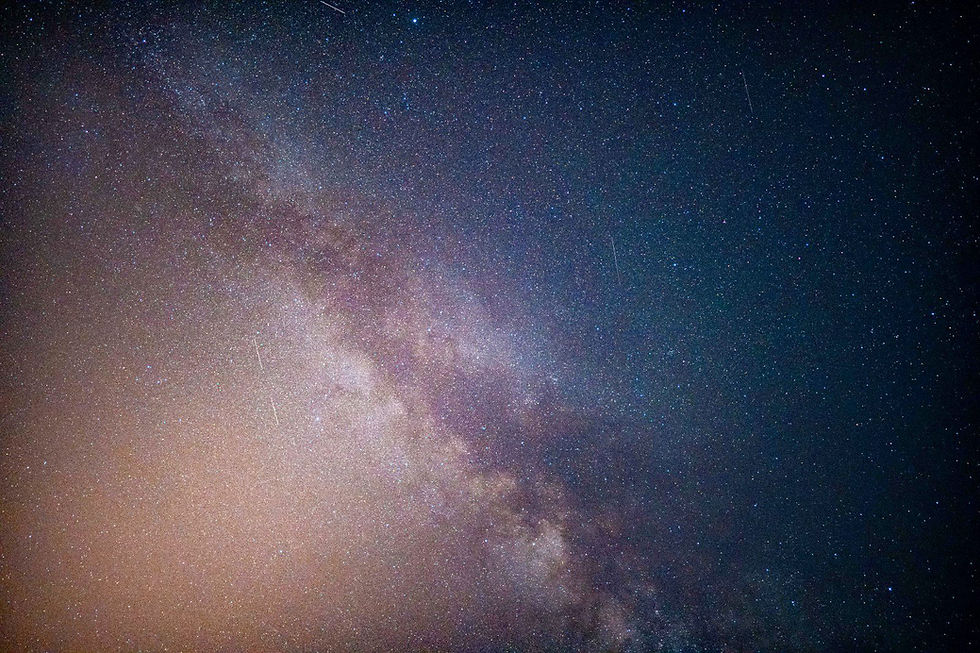
Photography by Mark Cassar, a Maltese photographer whose night-sky work captures these islands after dark better than most. See more of his work on Instagram.
The sea option: the best seat in the house
Malta has one stargazing advantage most destinations cannot match: within an hour of the marinas at Ta' Xbiex and Sliema, right beside Gzira, you can be at anchor with zero light pollution and horizon in every direction. For couples especially, a skippered evening charter is hard to beat: sail out at sunset, drop anchor off Comino or the quieter northern coast, and watch the show from the deck with the sea perfectly still around you. Several local operators run evening and overnight charters through August, and the peak nights book up, so reserve early and confirm the skipper is happy to stay out late; the meteors do their best work after midnight. Bring warm layers, as the sea breeze is real even in high summer.
Making a night of it, solo or a deux
Build the evening around the wait rather than the meteors alone. Pick up a bakery picnic before leaving Gzira, arrive at your spot for golden hour, and treat the first slow hour of darkness as part of the experience: this is when the Milky Way itself emerges, a spectacle most city dwellers have never properly seen. Going solo, it is a rare few hours of genuine quiet; as a couple, it is about as good as a date night gets for the price of a blanket and a bottle. Plan your return before you leave: buses thin out late, so a ride app, a hired car for the night, or that skippered boat solves the journey home.
If clouds interfere
August in Malta is reliably clear, but if haze or cloud does drift in on the peak night, do not write the trip off. The shower stays strong for several nights either side of the peak, and meteors flashing between broken cloud have their own drama. Check the forecast, stay flexible, and keep the blanket by the door.
Frequently asked questions
When is the Perseid meteor shower in 2026?
The shower is active from mid-July to late August 2026, peaking on the night of Wednesday 12 August into the pre-dawn hours of Thursday 13 August. Rates are best in the hours after midnight, and the peak coincides with a new moon, giving the best viewing conditions since 2018.
Where is the best place in Malta to watch the Perseids?
Anywhere well away from the harbour glow: Dingli Cliffs, Ras ir-Raheb past Bahrija, Majjistral Park, L-Ahrax point in the north, or Gozo for the darkest skies of all. For zero light pollution, a skippered evening boat charter from the marinas beside Gzira is hard to beat.
Do I need a telescope to see the Perseids?
No. The Perseids are a naked-eye event. Find a dark spot, give your eyes twenty to thirty minutes to adjust, avoid looking at your phone, and lie back to take in as much sky as possible.
Watching a meteor shower is exactly the kind of thing a longer, slower stay in Malta makes room for. Morrison Court's short term and mid-term apartments in Gzira put you minutes from the marinas and an easy drive from the island's darkest skies, with a proper workspace waiting for the morning after. First time on the island? Start with our 13 things to know before visiting Malta and, if you are staying to work, our complete guide to working from Malta. Check availability and book direct at morrisoncourt.com.